
How to Set Up a Calm Down Corner in a Pre-K Classroom
Updated: Aug 24
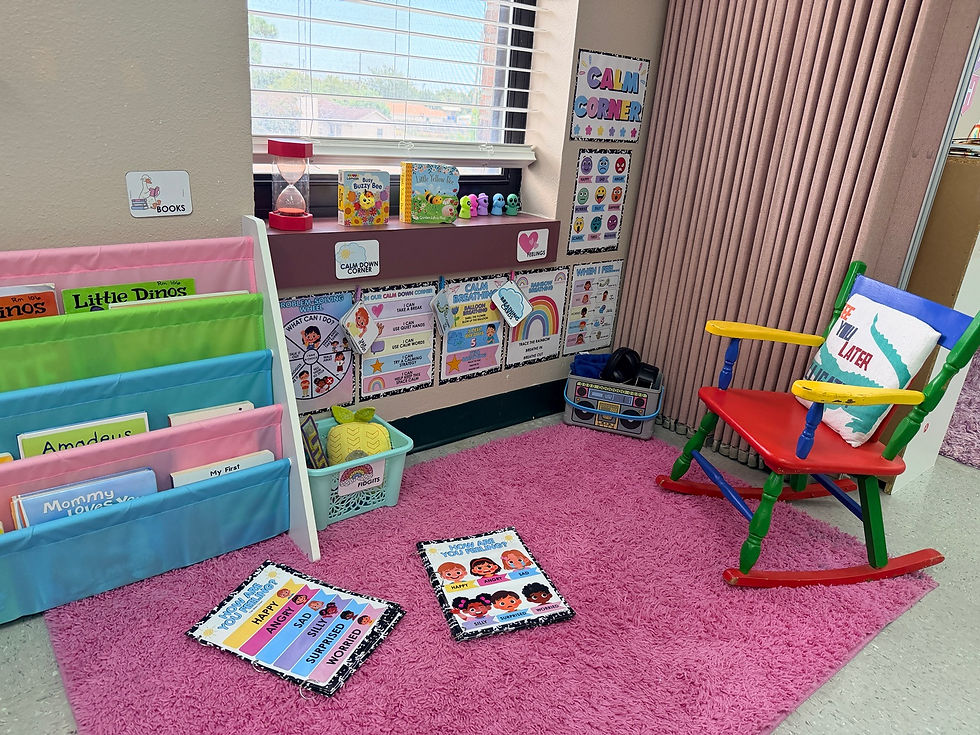
One thing I’ve learned in Pre-K is that telling a four-year-old to “calm down” usually isn’t very helpful.
They’re still learning what their feelings are, why they’re having them and, probably the biggest piece, what they can actually do when those feelings become overwhelming.
That’s why I wanted the calm down corner in my classroom to be more than a cute chair and a basket of fidgets. I wanted it to be a space where my students could begin learning the skills they need to recognize their emotions, regulate their bodies, and solve problems.
And it definitely doesn’t have to take up half your classroom to do that!
What Is a Calm Down Corner?
A calm down corner is a designated classroom space where children can take a break when they’re feeling overwhelmed, frustrated, angry, sad, worried, or simply in need of a little quiet.
But I don't use it as a punishment space.
The goal isn't to send a child there because they're having a difficult moment. I want my students to gradually learn to recognize when they need a break and have tools available to help them work through what they're feeling.
For my Pre-K students, that means the space needs to be comfortable, simple enough for them to navigate independently, and, most importantly- visual.

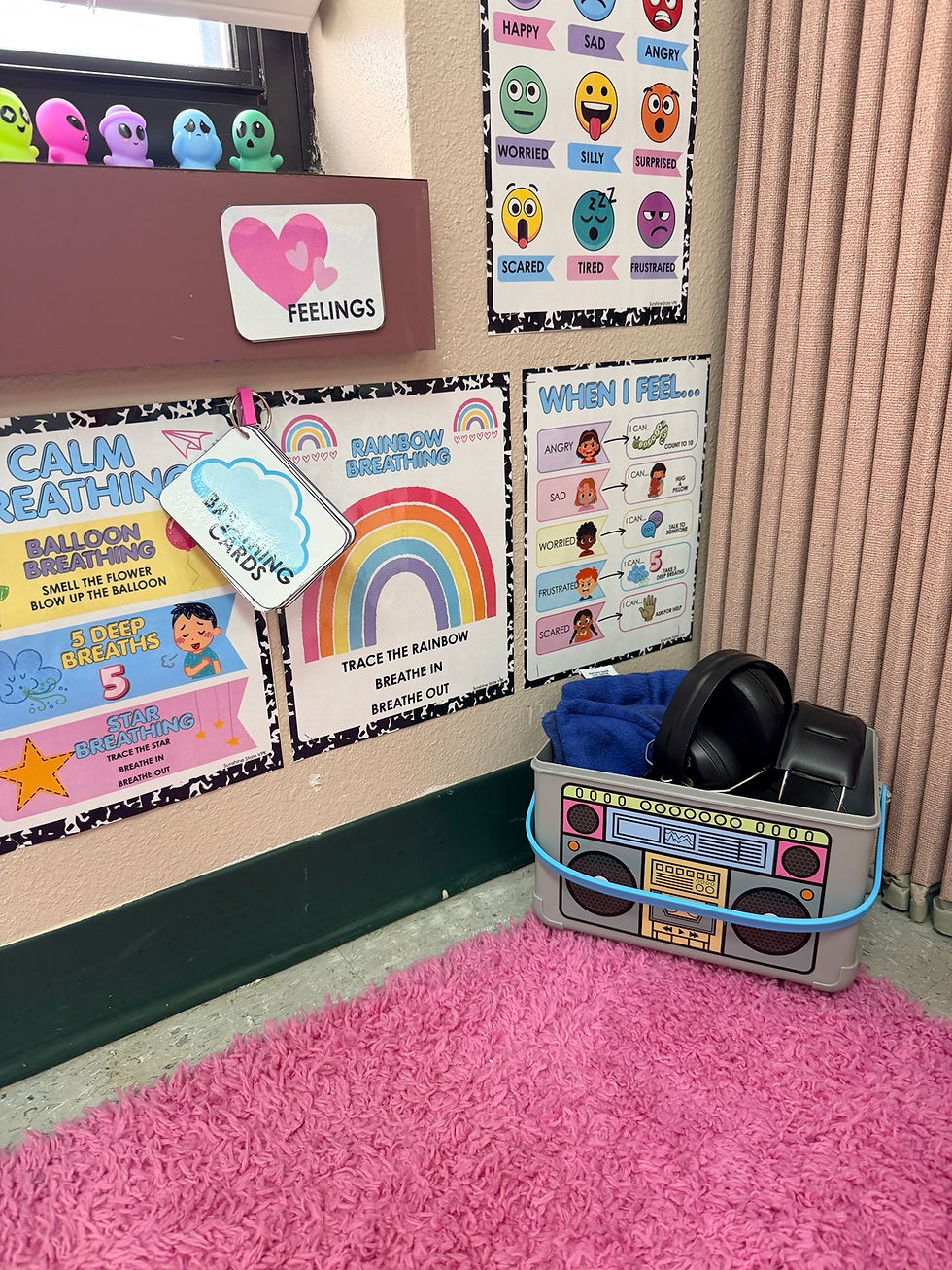

Start by Helping Children Name Their Feelings
Before children can choose an appropriate calming strategy, they first need to begin recognizing what they're feeling.
That's why I keep feelings visuals where my students can easily see and access them.
We talk about emotions like happy, sad, angry, worried, frustrated, scared, surprised, and even silly. The goal isn't for children to label emotions as "good" or "bad." All of those feelings are normal.
Instead, we're building the vocabulary they need to tell us:
"I'm angry."
"I'm worried."
"I'm sad because I miss my mom."
That is a HUGE step toward eventually being able to manage those feelings.
Teach What Children Can Do With Big Feelings
This is the part I think sometimes gets missed.
We can't just teach children to identify an emotion and stop there.
If a child tells me, "I'm angry!" my next question is: Okay...what can we do when we're angry?
That's why I include concrete strategies alongside our feelings visuals.
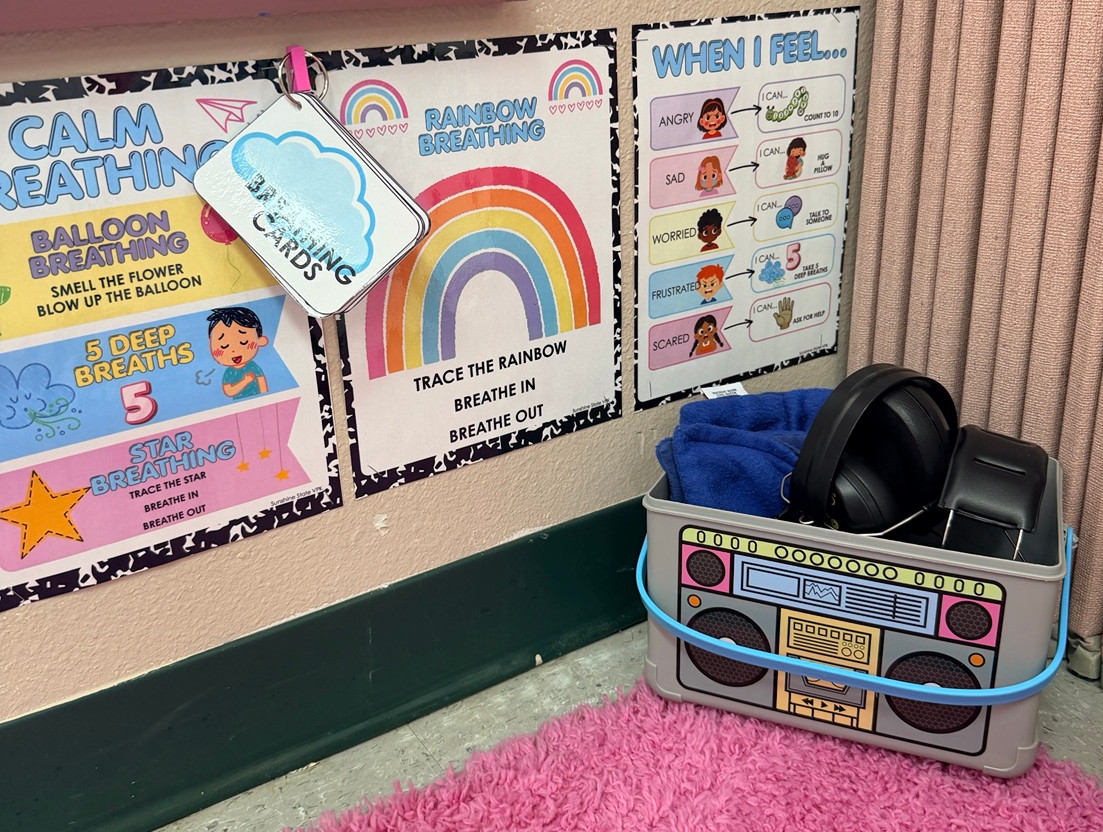
Depending on what a child is feeling, that might mean taking some deep breaths, counting to ten, asking an adult for help, hugging a pillow, reading a book, getting a drink of water, drawing, stretching, or simply taking a break.
These may seem like very simple strategies to adults, but they're skills that young children have to learn and practice.
Eventually, I want a child to move from needing me to say, "It looks like you're frustrated. Let's take some deep breaths," toward recognizing that feeling and choosing a strategy on their own. That's the real goal!


Give Them Choices They Can Actually Understand
A calm down corner can quickly become overwhelming if we fill it with too much stuff.
I prefer giving children a small collection of meaningful choices rather than tossing every sensory toy I can find into a giant bin.
My calm corner includes things like fidgets, books, visual calming strategies, breathing exercises, headphones, a pillow, and other simple sensory tools.
I also use individual visual cards that children can look through when they need help choosing a strategy.
The pictures are especially important in Pre-K because my students don't need to be readers to use them.
They can see a child hugging a pillow, taking deep breaths, reading a book, stretching, or counting and understand what that choice means.
Don't Forget About Problem Solving
Not every big feeling comes from needing sensory regulation.
-Sometimes somebody took the toy.
-Someone wouldn't share.
-A friend said something they didn't like.
-They want something another child has.
Welcome to Pre-K! 😂
Those moments give us opportunities to teach children how to solve social problems rather than immediately solving everything for them.
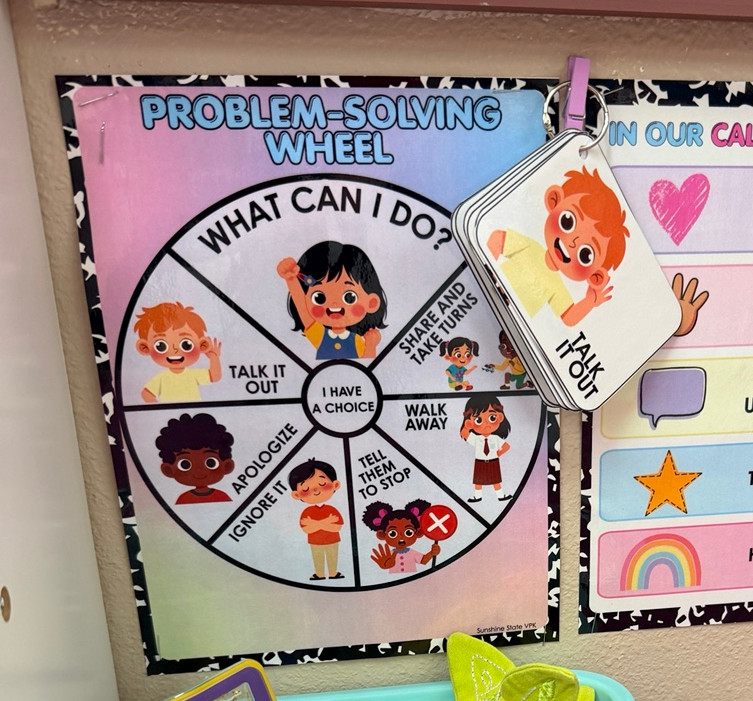
Our problem-solving visual gives children concrete options such as talking it out, taking turns, walking away, telling someone to stop, apologizing, or choosing to ignore something.
Do I expect a four-year-old to calmly stroll over to this chart in the middle of an argument and independently conduct conflict mediation?
Absolutely not.
But we can use these visuals together. Over time, those repeated conversations help build the language and skills children need to begin solving small problems more independently.
Introduce the Calm Down Corner BEFORE Anyone Needs It
This might actually be the most important part of setting one up.
Don't wait until a child is already completely overwhelmed to introduce all of these materials.
At the beginning of the year, I teach the calm down corner just like I teach any other part of our classroom.
We explore the materials. We talk about the feelings. We practice some of the breathing exercises. We look at the calming choices. We talk about when someone might want to use the space and what the space isn't for.
That way, when a child actually needs it, the tools are already familiar.
And throughout the year, we can revisit those strategies during normal classroom moments.
Emotional regulation shouldn't only be discussed while a child is dysregulated.
Your Calm Down Corner Doesn't Have to Be Pinterest Perfect
Here's something worth remembering: you don't need an enormous classroom or an elaborate setup.
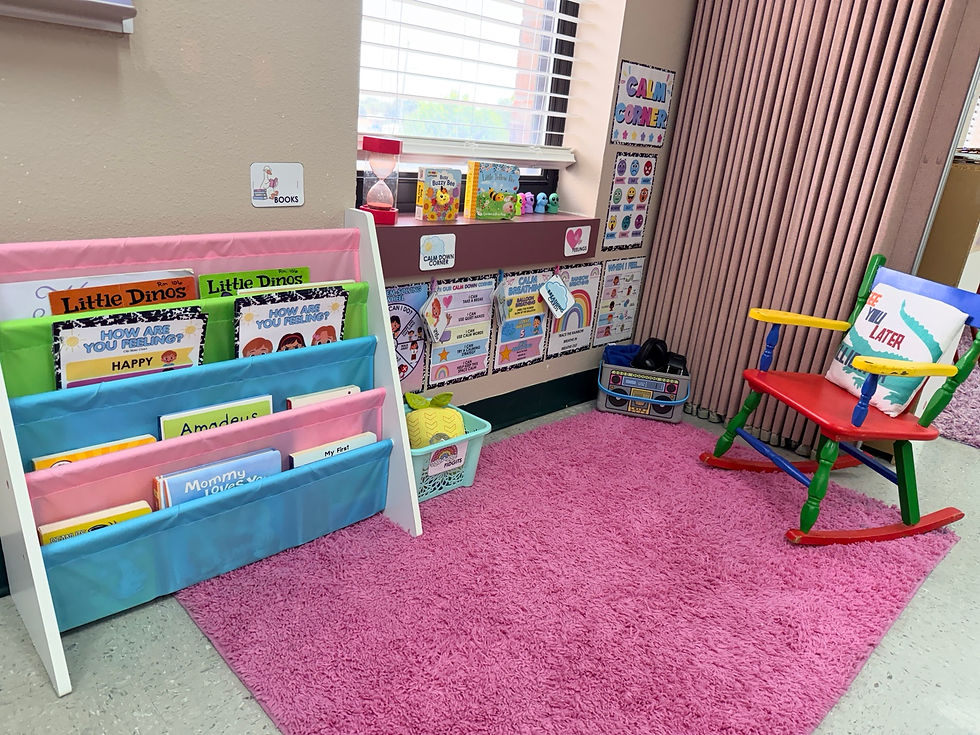
Mine is tucked into a quiet(er) area near a window.
There's a rug, a chair, some visuals on the wall, a basket of sensory tools, headphones, books, and materials children can access.
That's really all the space needs to do.
I'd rather have a small calm corner that children actually know how to use than an elaborate one filled with materials that were never explicitly taught. Because ultimately, the goal isn't the corner.
The goal is helping children build skills they can eventually use without the corner.
Creating a Calm Down Space in Your Own Classroom
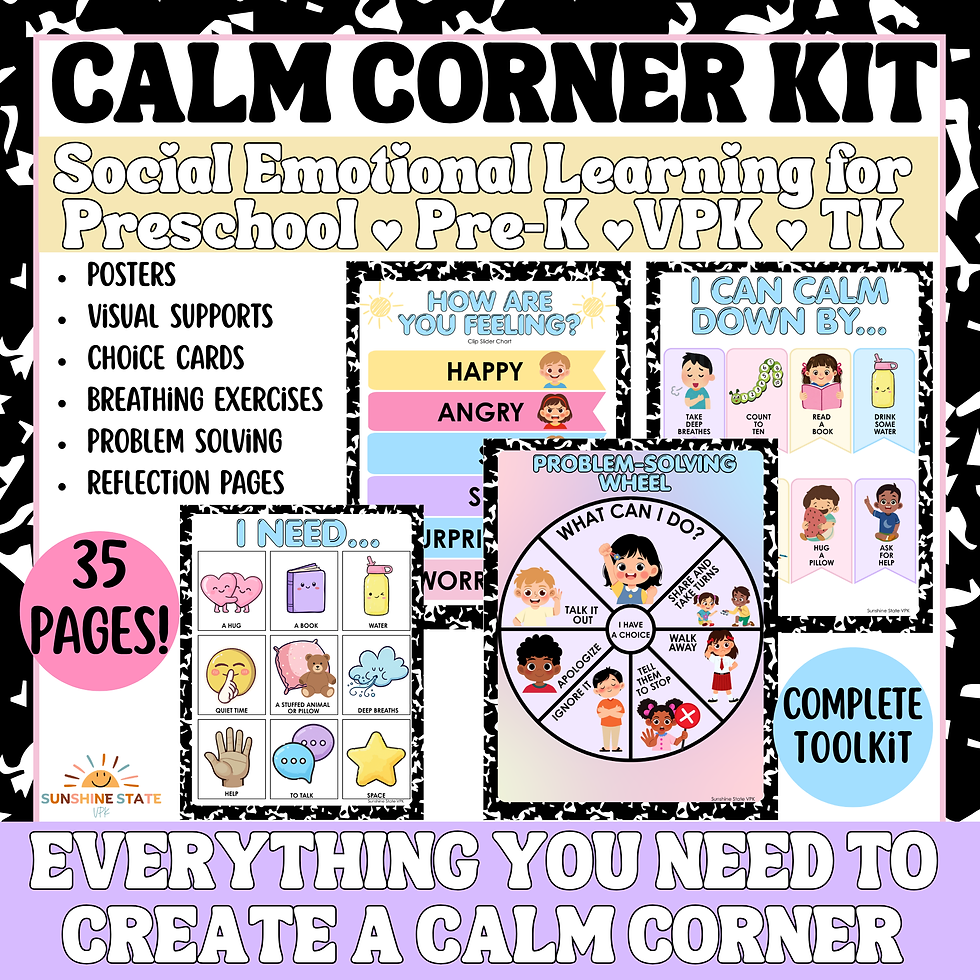
When I created my Calm Down Corner Starter Kit, I wanted the pieces to work together instead of just being a collection of cute SEL posters.
It includes tools for identifying feelings, choosing calming strategies, practicing breathing techniques, working through problems, and helping children connect a feeling with something they can actually do about it.
These are the same materials you can see being used throughout my own classroom calm down corner in these photos.
If you're setting up a calm space in your preschool or Pre-K classroom, you can find the Calm Down Corner Starter Kit by clicking the button below.
But whether you're using my materials or making your own, I'd start with the same three questions:
What am I feeling?
What can I do?
What will help my body feel ready to rejoin the group?
That's really what I want this little corner of my classroom to teach.


Comments